
A $600,000 Wake-Up Call
From Equipment to Response Capability
The goal wasn’t to eliminate contractors. It was to become a more informed customer - and a more capable first responder.
The goal wasn’t to eliminate contractors. It was to become a more informed customer - and a more capable first responder.
Building Internal Capability
Morgan State worked with Ready 2 Respond® (R2R) to assess its capabilities across three key areas: response planning, staff preparedness, and equipment readiness. From there, the university:
- Built professional extraction and drying capabilities alongside stronger response plans
- Started small and scaled up – an initial equipment kit created a centralized mobilization point, with additional equipment added as staffing and response capacity grew
- Improved equipment accessibility and zoning based on campus needs
- Prioritized supervisor training and expanded first-responder training to other additional
Together, these changes gave staff a clearer process for assessing a water event, beginning mitigation, and determining whether the university could manage the incident internally or needed outside help.
Training for Technical Skill and Leadership
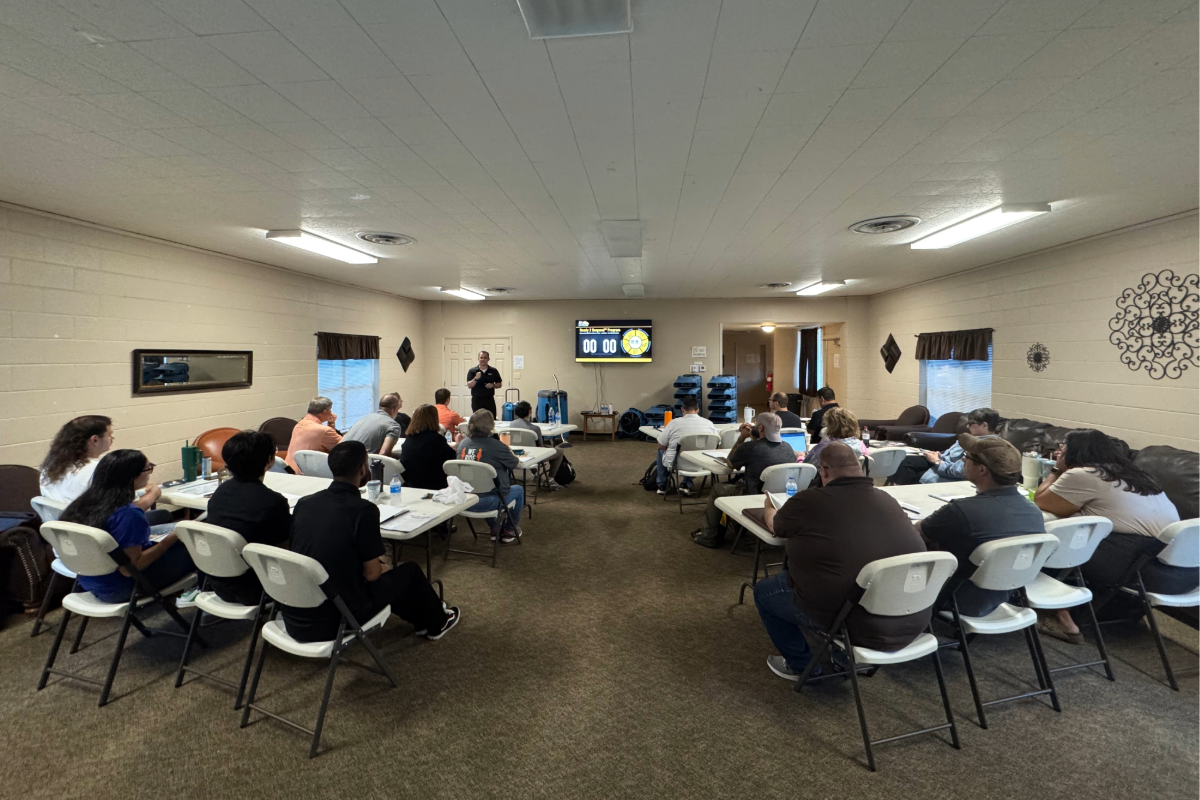
One of the biggest shifts in Prince’s thinking involved training. He initially focused on the need for better equipment but hadn’t anticipated how much value would come from understanding the science behind the drying process.
“What I didn’t fully see at the time was the need for training,” Prince said. “It wasn’t just, ‘Here’s how you turn equipment on.’ It was understanding the science of drying, how to place equipment, how to maintain it, and how to know whether the process was working.”
Supervisors were trained to assess affected areas, extract standing water, calculate drying equipment requirements, monitor moisture levels, and adjust as conditions changed – building the technical foundation needed to make better decisions during real incidents.
Prince also viewed developing supervisors as an investment in the whole organization. “As leaders, we’re always looking to improve things, but you have to start with the hand that you were dealt,” he said. At Morgan State, Prince focused on understanding the resources already in place and investing in people who could move the organization forward, so knowledge wasn’t limited to a small group of experienced responders.
“When you invest in your leaders and allow them to develop, they pay it forward by training others,” Prince said – turning water response into part of a broader strategy for building confident supervisors who could share their knowledge and lead effectively under pressure.
The Results: Greater Control, Lower Costs, Better Decisions
Within roughly 14 weeks of launching the R2R program, Morgan State deployed its equipment on five water events. Each remained under 1,000 square feet, with faster response helping limit how far the water spread.
Prince estimated that about half of those incidents would have previously required contractor support, since staff would have relied on shop vacs, squeegees, and other limited resources. Across the five events, Morgan State estimated it avoided $15,000 to $20,000 in drying equipment rental costs.
The benefit extended beyond what the university could manage in-house, too. As staff grew more knowledgeable about drying, they got better at evaluating contractor recommendations and judging how long equipment needed to stay on-site. As a result, Prince reported that contractor equipment rental rates began to decline.
Contractors were still called in when an incident’s scale or complexity exceeded the university’s internal capabilities, but bringing them in became a deliberate call rather than a default response.
Confidence and Consistency in Practice
The reduced contractor and rental expenses delivered a measurable return, but the bigger change was operational: staff gained confidence, response became more consistent, and supervisors had a stronger technical foundation for decision-making.
For Prince, that reflects a larger truth about facilities leadership. Strong organizations don’t just react better to the next problem – they learn from previous events, invest in their people, and build systems that leave the organization better prepared for the next event.
Five Lessons from Morgan State
- Equipment must be accessible, not just available. Where equipment is stored directly affects how quickly mitigation can begin. Strategic placement and zoning can save valuable response time.
- Training should teach the science behind the process. Operating an extractor or airmover is only the starting point. Staff also need to understand moisture migration and how to gauge whether their strategy is working.
- First-hour ownership doesn’t mean eliminating contractors. Some events will always require outside expertise. Internal capability means teams can mitigation immediately and make a more informed decision about when to escalate.
- Knowledge improves contractor oversight. Leaders who understand the drying process can more effectively evaluate equipment needs, rental duration, and contractor performance.
- Developing supervisors builds long-term capability. Training has greater impact when leaders pass knowledge to other responders and reinforce consistent practices team-wide.
Building Readiness Before the Next Event
Morgan State strengthened its water response by deliberately connecting planning, people, equipment, and leadership around a common goal.
Water emergencies are an unavoidable part of campus operations. Morgan State’s experience showed how stronger in-house preparedness can help teams respond sooner, limit the spread of damage, make more informed decisions, and know when outside resources are needed.
Contact the R2R team for help assessing internal water response capabilities, developing a customized response plan, and delivering hands-on team training.
For facility management tips, follow us on LinkedIn and subscribe to our Facility Insights newsletter.
Fact vs. Myth: Odor Control Is More Than Masking